
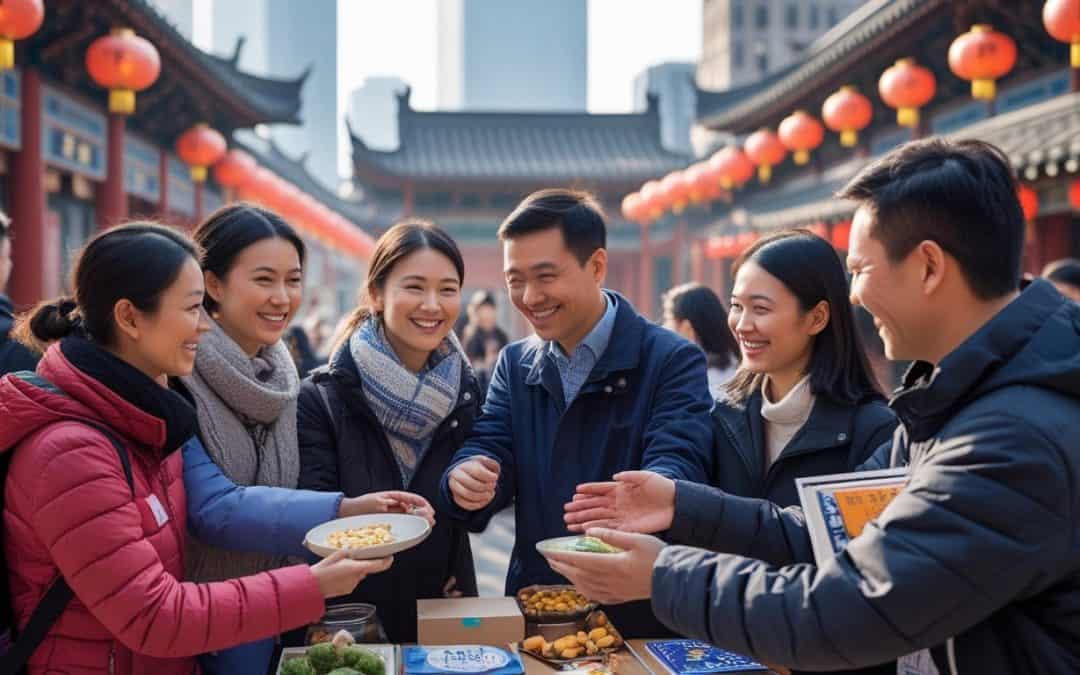
European immigrants bring unique perspectives to China, navigating challenges and forming deep connections with local people. Their stories highlight the importance of daily adaptation, building community bonds, and finding a place to call home.
Adjustment to Life in Urban and Rural China
Many Europeans arrive in China’s major cities like Beijing, Shanghai, or Guangzhou. Here, they must adjust quickly to busy streets, new foods, and fast-paced routines. Urban life offers modern comforts, but the language barrier can make tasks such as shopping or finding housing more complicated.
Table: Common Urban Challenges and How Immigrants Respond
| Challenge | Common Response |
|---|---|
| Language barrier | Take classes, use apps |
| Busy public transport | Learn routes, ask locals |
| Finding familiar foods | Shop at expat stores |
In smaller towns or rural areas, adaptation can be even more demanding. Rural communities may have fewer English speakers and limited Western amenities. Some Europeans describe how curiosity from locals helps break the ice, easing their adjustment.
Different settings shape the daily lives of immigrants. While some embrace the energy of big cities, others grow fond of the slower pace and traditions found in rural China.
Experiences with Local Communities
Interaction with local communities is a key part of any immigrant’s story. Many Europeans build relationships with Chinese neighbors, colleagues, and friends through shared meals, festivals, or language exchanges.
Simple Steps to Build Local Bonds:
- Joining community events or clubs
- Volunteering or teaching
- Participating in holiday gatherings
Some European immigrants talk about the warmth and help they receive from Chinese residents, especially in smaller cities. These positive experiences increase mutual understanding between cultures. At the same time, misunderstandings can occur, especially at first, due to differences in customs, personal space, or communication styles.
Over time, learning about traditions such as Spring Festival or Dragon Boat Festival helps immigrants feel included and respected by those around them.
Forming a Sense of Belonging
Establishing a sense of belonging takes time. For many Europeans, buying property or starting families in China signals a deeper commitment to their new home. Some choose to invest in local neighborhoods; more than 10% of over 200,000 Europeans in China have purchased homes, with both short-term and long-term residents making this choice. For more on this, see immigrant property ownership in China.
Belonging also grows from everyday routines. Making friends at work, learning Mandarin, or celebrating local holidays adds meaning to daily life. These actions help European immigrants bridge cultures, shaping new identities and welcoming connections across differences.
Integrating into Chinese Culture
European newcomers often encounter new languages, traditions, and beliefs in China. Daily life changes as they adjust to customs, community rules, and values that shape Chinese society.
Learning Chinese Language and Customs
Mastering the Chinese language is one of the key steps for foreigners wanting to feel at home in China. Speaking Mandarin helps them make friends, join local events, and understand daily conversations. Even learning a few words or phrases can break the ice with Chinese neighbors.
Adapting to cultural practices—such as greeting with a handshake, showing respect to elders, and observing dining manners—makes social interactions smoother. Participants who embrace Chinese festivals, try local foods, and learn about family traditions find it easier to build friendships and trust. Many describe this effort as essential for building a private connection with Chinese society and feeling accepted.
Key customs to learn:
| Custom | Description |
|---|---|
| Addressing elders | Use titles and polite expressions |
| Gift giving | Present gifts with both hands |
| Table manners | Follow host’s lead and avoid waste |
Impact of Confucian Values
Chinese society is strongly influenced by the teachings of Confucius. Respect for hierarchy, harmony within groups, and strong family ties are core concepts. Europeans living in China quickly notice that these values affect both work and social life.
Confucianism encourages people to value education, work hard, and maintain good relationships. It is common for workers to put team goals above individual desires. Newcomers often learn that listening more than speaking, showing humility, and keeping a calm attitude are viewed as signs of wisdom and maturity.
Understanding filial piety (respect for parents and elders) helps foreigners understand family dynamics in China. Those who take time to study these cultural values find it easier to connect with coworkers, friends, and neighbors on a deeper level.
Adapting to New Social Norms
Social rules can feel strict but also provide a welcoming structure. For example, personal space may be different, and group harmony is often put first. People are expected to dress modestly, avoid loud arguments, and greet others politely.
Building relationships, called “guanxi,” is important for both business and daily life. Networking is done over shared meals and through introductions from mutual friends. Learning to read nonverbal signals—such as body language and facial expressions—helps newcomers avoid misunderstandings.
Foreigners who take part in Chinese festivals, community gatherings, and local clubs soon discover they are welcomed as long as they show respect and openness to cultural diversity. This approach has helped many Europeans embrace Chinese culture as their second home.
Bridging European and Chinese Worlds
European individuals living in China have played active roles in connecting two very different societies. Their efforts have helped to open doors, create lasting partnerships, and build greater understanding between Europe and China.
Promoting Cultural Exchange and Dialogue
Many Europeans who moved to China have made it a priority to foster cultural exchange. They have organized language clubs, art exhibitions, and public forums that invite discussion and learning. Some individuals became cultural ambassadors, encouraging greater tolerance and curiosity among locals.
Groups like the Society for Anglo-Chinese Understanding grew from these efforts. Such organizations create opportunities for both sides to challenge stereotypes and appreciate their differences. Joint projects and friendships formed through these encounters enrich both cultures.
Bilingual events and educational workshops have also played a key role. They help break down language barriers and show firsthand how shared experiences can create common ground.
Art, Film, and Media as Cultural Bridges
Art, film, and media have become tools for bridging divides. European artists and filmmakers in China have shared their stories through documentary films, cross-cultural exhibitions, and online platforms.
Works like “Rediscovering China” present personal journeys, showing how people from different backgrounds interact and build new lives. These artistic projects encourage audiences to rethink their views and see diversity as a source of strength.
Collaboration between Chinese and European creators often introduces new styles and perspectives. This leads to unique works that highlight both cultures and reach broader audiences. Media coverage and storytelling have become pathways for mutual respect and interest.
Educational and Professional Contributions
European professionals have been involved in Chinese education, research, and business for decades. Some, like Joseph Needham, greatly influenced how Chinese science and history are studied in the West. Others work as teachers, engineers, or advisors helping Chinese institutions grow and modernize.
International schools, scientific exchanges, and training programs illustrate the benefits of shared knowledge. European experts introduce new ways of thinking while learning from local traditions.
Many of these individuals become long-term residents, contributing not only their skills but also serving as role models for cross-cultural cooperation. Their presence often inspires Chinese students and colleagues to explore life and work beyond their own borders.
Historical Perspectives on European Migration to China
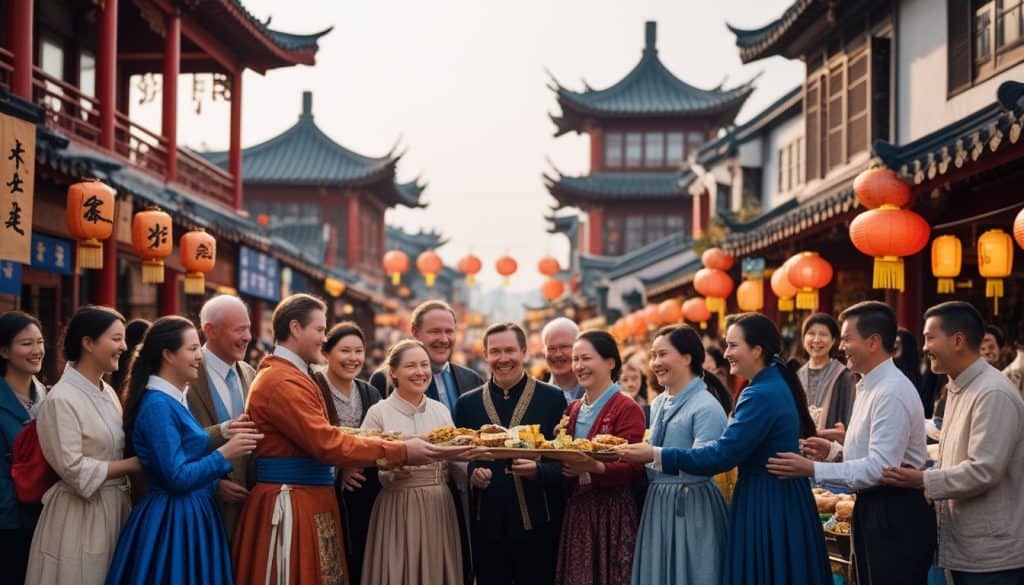
European migration to China has shaped parts of the country’s culture, history, and society in different ways. Migrants have included religious leaders, refugees, and individuals whose talents and views left a mark on Chinese culture.
Jewish Refugees in Shanghai
During World War II, Shanghai became a rare safe haven for Jewish refugees escaping persecution in Europe. From 1933 to 1941, more than 20,000 Jews settled in Shanghai, as the city did not require entry visas at the time.
They formed a close-knit community, mostly in the Hongkou district, where they established schools, bakeries, and synagogues. The daily lives of these refugees mixed European and Chinese influences, as they worked with local Chinese and adapted to new customs.
Shabbat services and the production of traditional foods continued, while children attended bilingual schools. Today, visitors to Shanghai can see museums and memorials that honor this unique chapter in the city’s past. More on this history can be found in detailed articles on European colonial heritage in Shanghai.
Legacy of Jesuit Missions
Jesuit missionaries were among the earliest Europeans to settle in China. In the 16th and 17th centuries, they built connections by learning the Chinese language and customs, dressing in Chinese clothing, and debating philosophy with officials.
Matteo Ricci, a well-known Jesuit, helped introduce Western science and mathematics. He translated books and launched dialogues between Chinese scholars and Europeans. His approach of blending Christianity with Chinese traditions helped the Jesuits gain trust, even reaching the Ming and Qing courts.
These missions encouraged early cultural exchanges, such as clockmaking, astronomy, and cartography. Some techniques introduced by the Jesuits are still part of science education in China today.
Notable Europeans Who Influenced China
Several Europeans in modern history have had a strong impact on Chinese culture and society. Sir Robert Hart, a British diplomat, managed the Imperial Maritime Customs Service for over 40 years and worked to modernize China’s trade systems.
French architect Paul Veysseyre contributed to Shanghai’s cityscape in the 1920s and 1930s, designing famous buildings that still stand along the Bund. Meanwhile, individuals like the German doctor Johann Schall von Bell served as scientific advisors at the Chinese court, sharing skills that improved Chinese astronomy and engineering.
These stories show that European migrants have affected fields such as architecture, science, business, and diplomacy. Their presence is often remembered in museums, buildings, and historical accounts related to both China and European influences.
